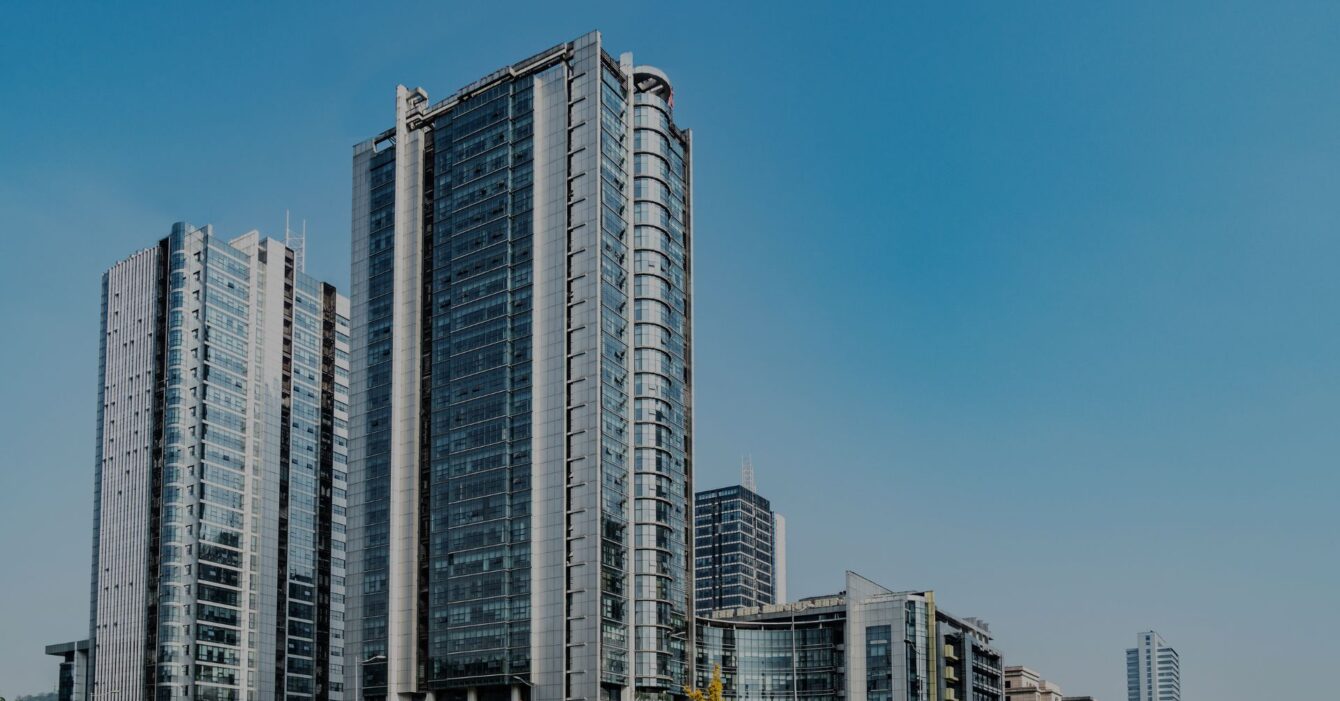
A premier high-rise commercial complex located in downtown Los Angeles, renowned for its modern infrastructure and commitment to sustainable building operations, partnered with CopperTree Analytics.
Together, the teams launched a data-driven collaboration focused on optimizing the building’s energy performance, reducing operational costs, and improving occupant comfort through smart building technology and ongoing performance management.
Verified Energy Savings
$0
Our Challenge
The team encountered several challenges typical of large, multi-system commercial buildings:
High baseline energy consumption across hydronic and air-handling systems due to non-optimized control sequences.
Complex high-rise system dynamics, requiring coordinated optimization to avoid disruptions across multiple floors.
Inconsistent equipment operation, including pumps and air-handling units running at unnecessarily high speeds.
Economizer inefficiencies, where dampers operated outside optimal temperature ranges, causing excessive mechanical cooling.
Limited visibility into real-time equipment performance trends before analytics integration.
These challenges increased operating costs and risked occupant discomfort, requiring optimization strategies that could be implemented without disrupting building operations.
Our Solution
Through a Managed Services framework, system data was continuously analyzed to identify inefficiencies and implement targeted Energy Conservation Measures (ECMs):
Condenser Water (CW) Pump Optimization
Temperature and pressure setpoints were refined, allowing pumps to operate at lower frequencies.
Chilled Water (CHW) Pump 21 Speed Reduction
Flow setpoints were adjusted, reducing VFD speed and improving pump efficiency.
Air Handling Unit (AHU) Supply and Return Fans Optimization
A zone demand reset strategy was implemented across multiple supply and return fans, optimizing airflow while maintaining comfort.
Economizer Damper Correction
Outdoor air temperature alignment corrections ensured economizer dampers operated within optimal conditions, reducing unnecessary cooling.
Chilled Water Pump Set Optimization
Differential pressure setpoints were reduced across multiple chilled water pumps, lowering VFD speeds and improving system efficiency.
Our Results
The implemented ECMs delivered measurable operational and financial impact:
Over $108,184 in verified energy savings
Significant reduction in overall building energy consumption
Improved occupant comfort through more stable temperature and airflow control
Enhanced operational efficiency through continuous analytics monitoring
Faster identification and resolution of system inefficiencies
The project demonstrates the value of combining advanced building analytics with continuous performance optimization to achieve sustained energy and operational improvements.